News & Announcements
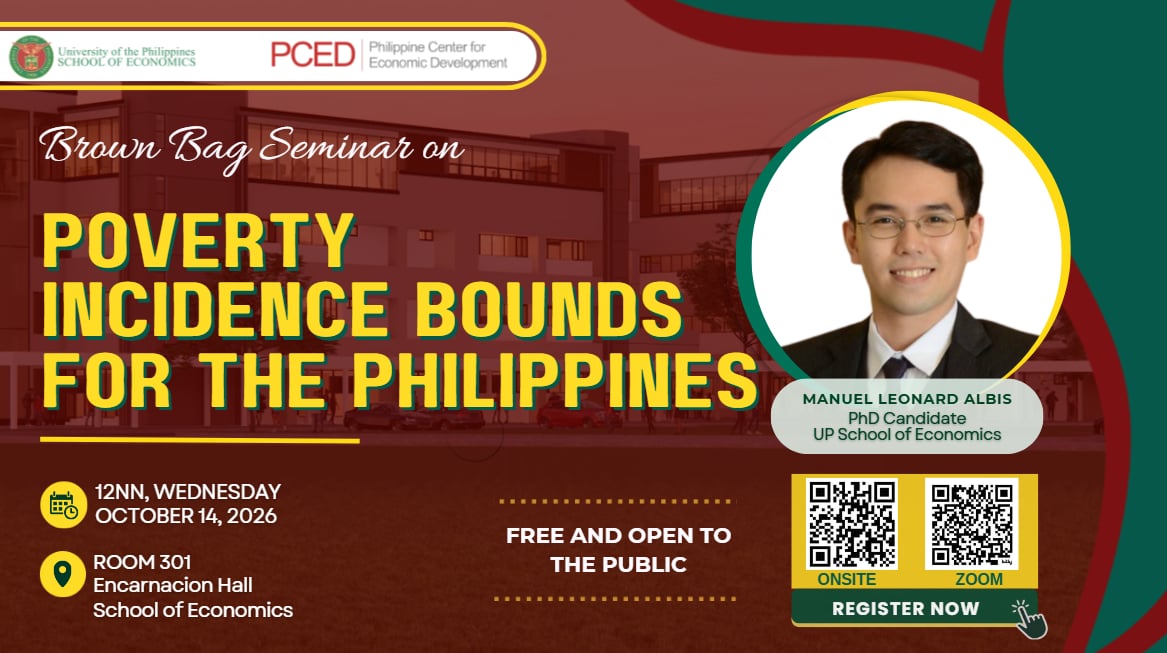
Brown Bag Seminar by Manuel Leonard Albis on 14 Oct 2026
You are cordially invited to a Brown Bag Seminar by Manuel Leonard Albis, PhD candidate at the UP School of Economics. The seminar will be on October 14, 2026 (Wednesday), 12NN, at Room 301, Encarnacion Hall, School of Economics, University of the Philippines. Seminar title: Poverty Incidence Bounds for the… Read More.
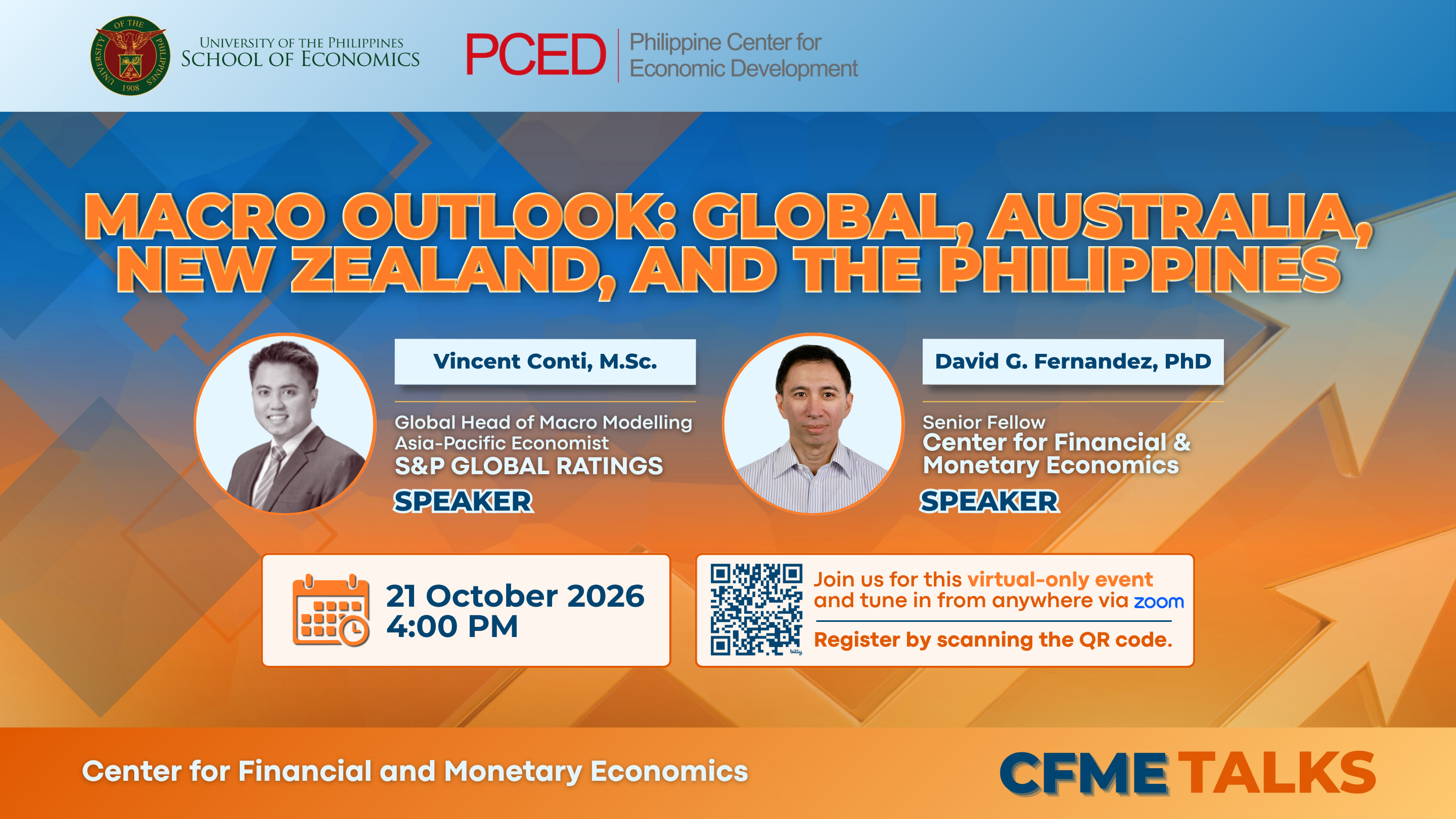
9th CFME Talk
👀 COMING SOON! 📣 SAVE THE DATE! 9️⃣ For the 9th CFME Talk!The Center for Financial and Monetary Economics (CFME) invites you to a timely discussion on: “Macro Outlook: Global, Australia, New Zealand, and the Philippines”. This lecture will be delivered by Vincent Conti, MSc, Global Head of Macro Modelling… Read More.
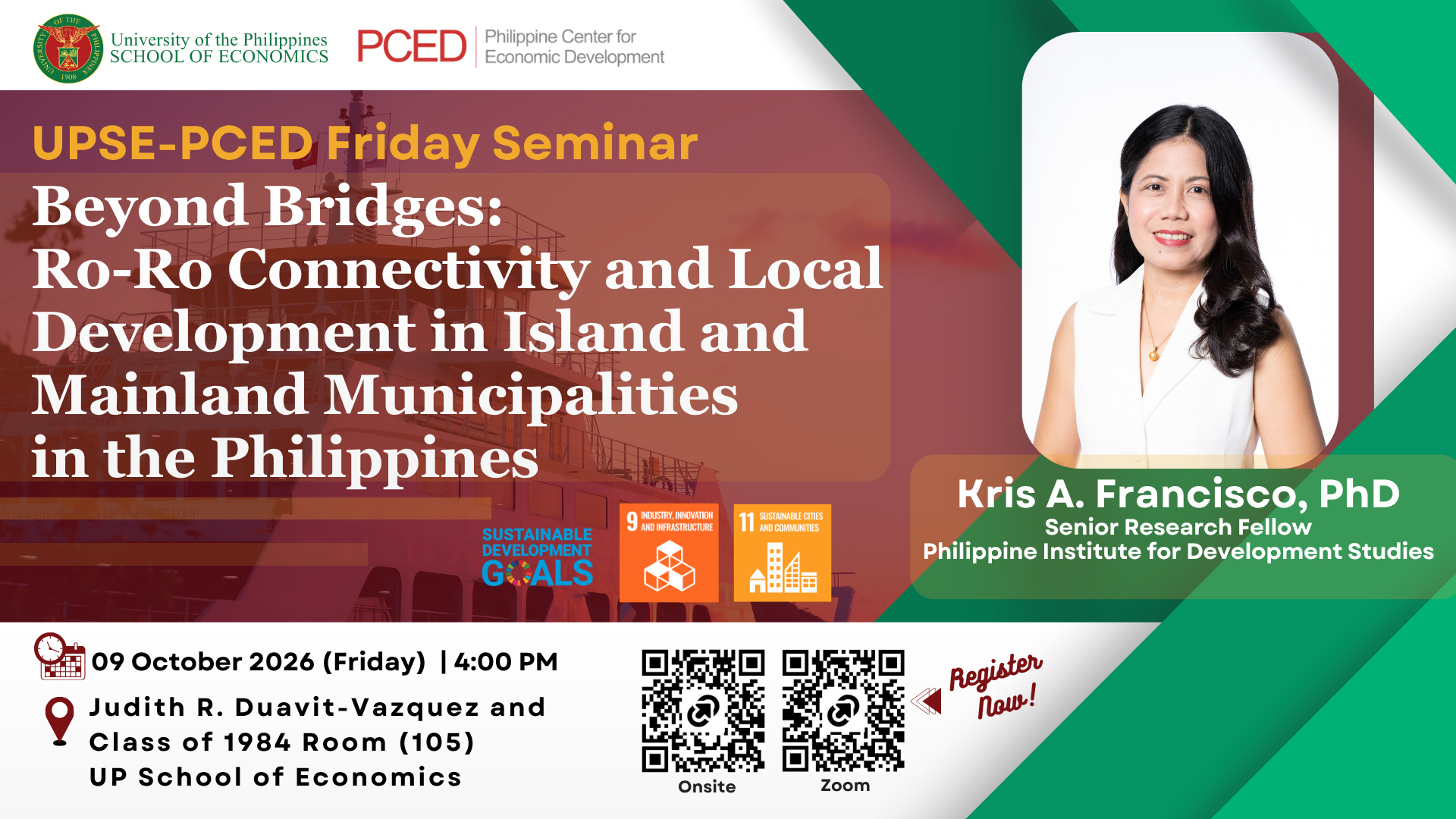
UPSE-PCED Seminar Series – 9 October 2026
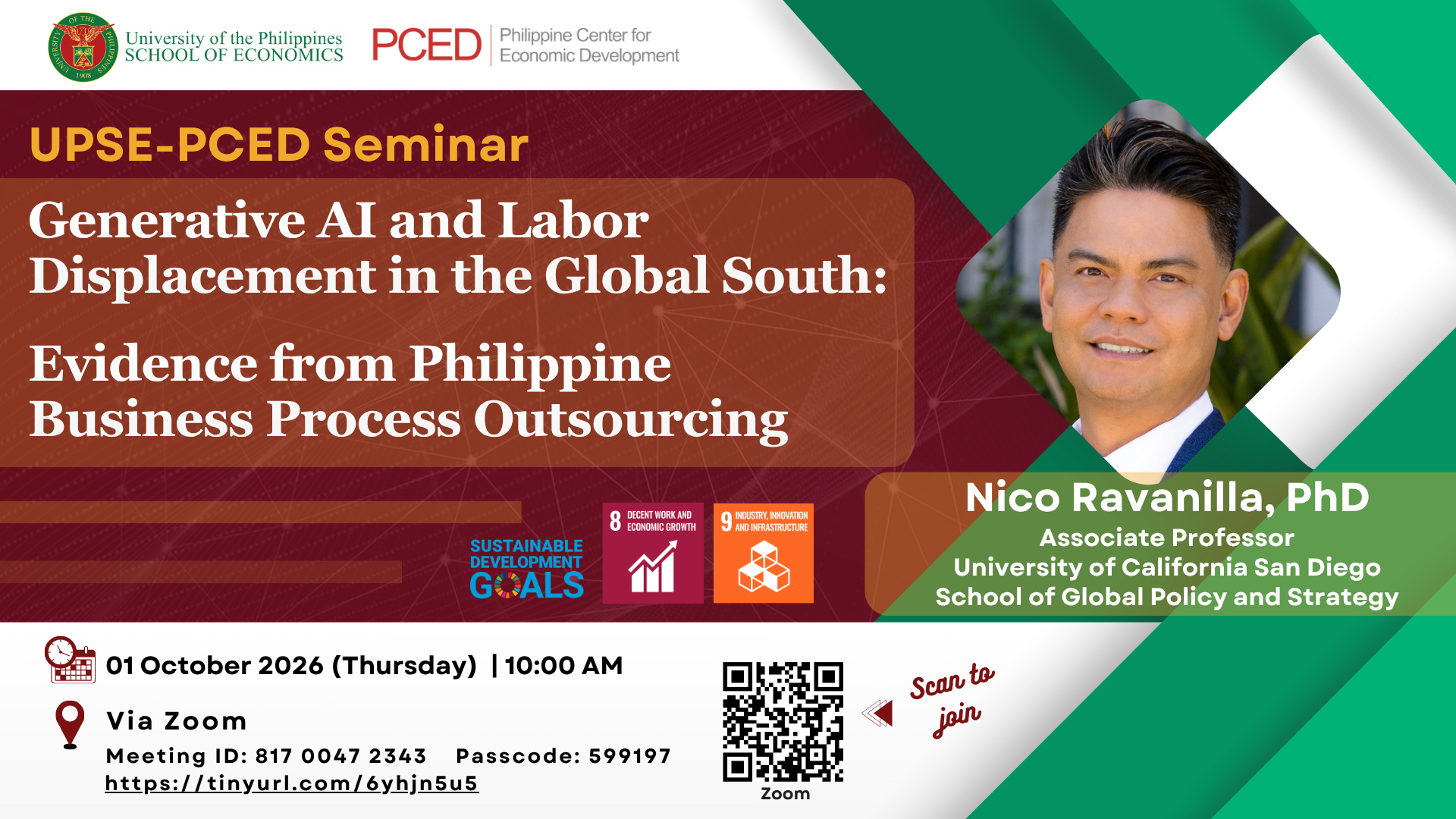
UPSE-PCED Seminar Series – 1 October 2026
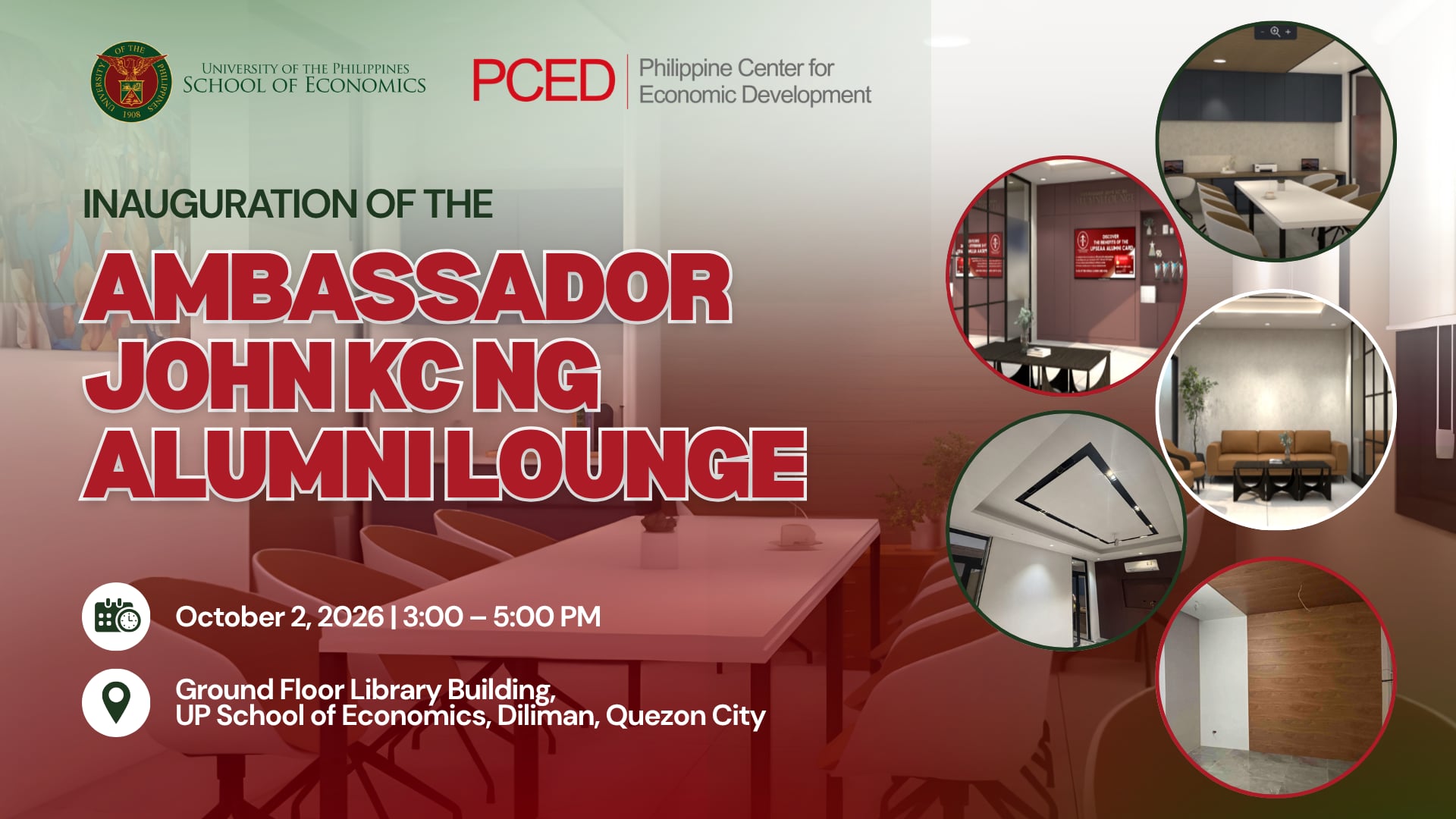
Inauguration of the Ambassador John KC Ng Alumni Lounge
The Alumni Lounge welcomes guests of UPSE. Now known as the Ambassador John KC Ng Alumni Lounge, this new space is set to be launched on October 2, 2026 3:00 PM Ground Floor Library Building, UP School of Economics, Diliman, Quezon City Read More.
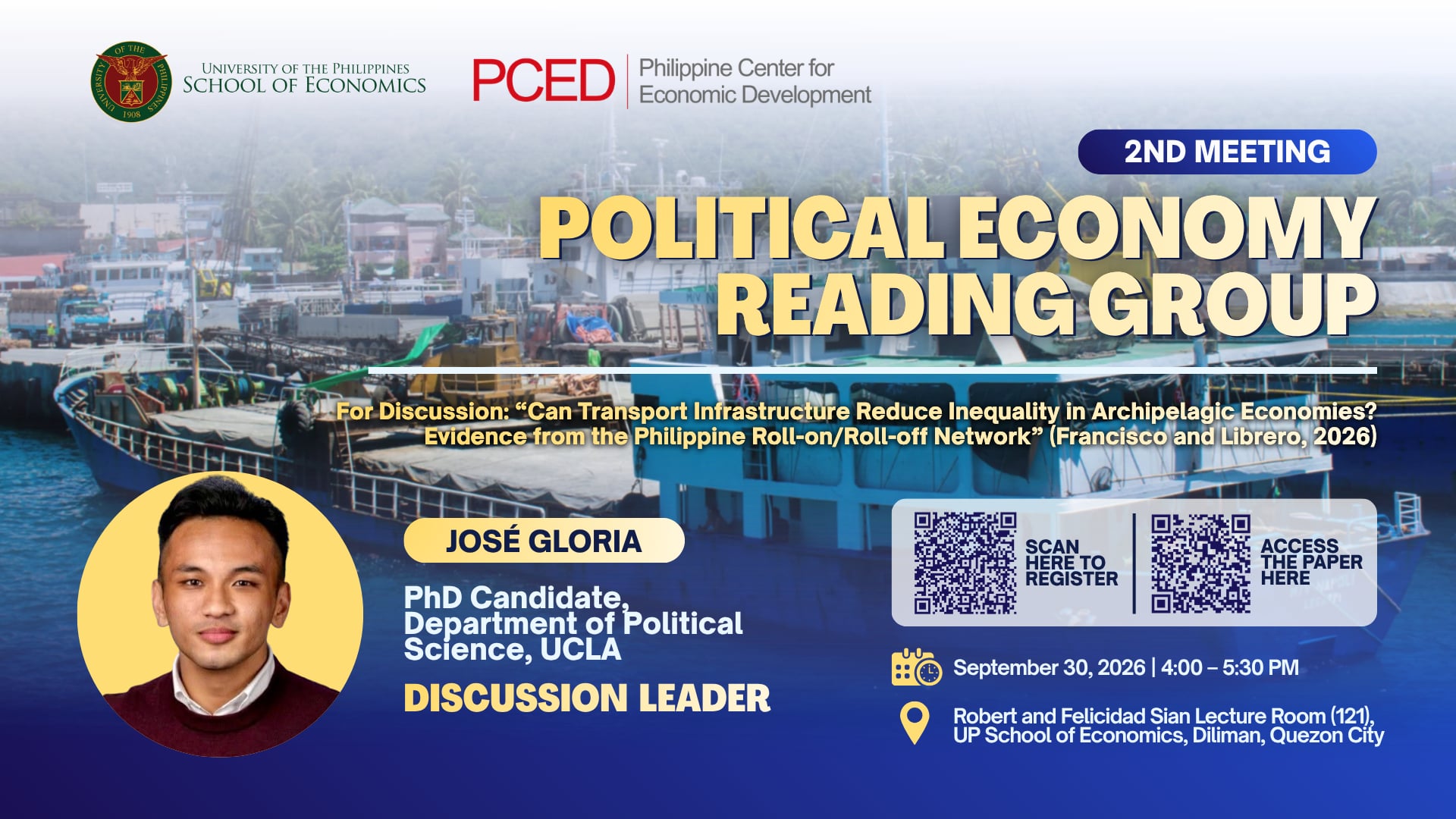
2nd Meeting of the Political Economy Reading Group
Join us for a discussion on “Can Transport Infrastructure Reduce Inequality in Archipelagic Economies? Evidence from the Philippine Roll-on/Roll-off Network.” Date: September 30, 2026 Time: 4:00–5:30 PM Venue: Robert and Felicidad Sian Lecture Room (121), UP School of Economics See you there! Read More.
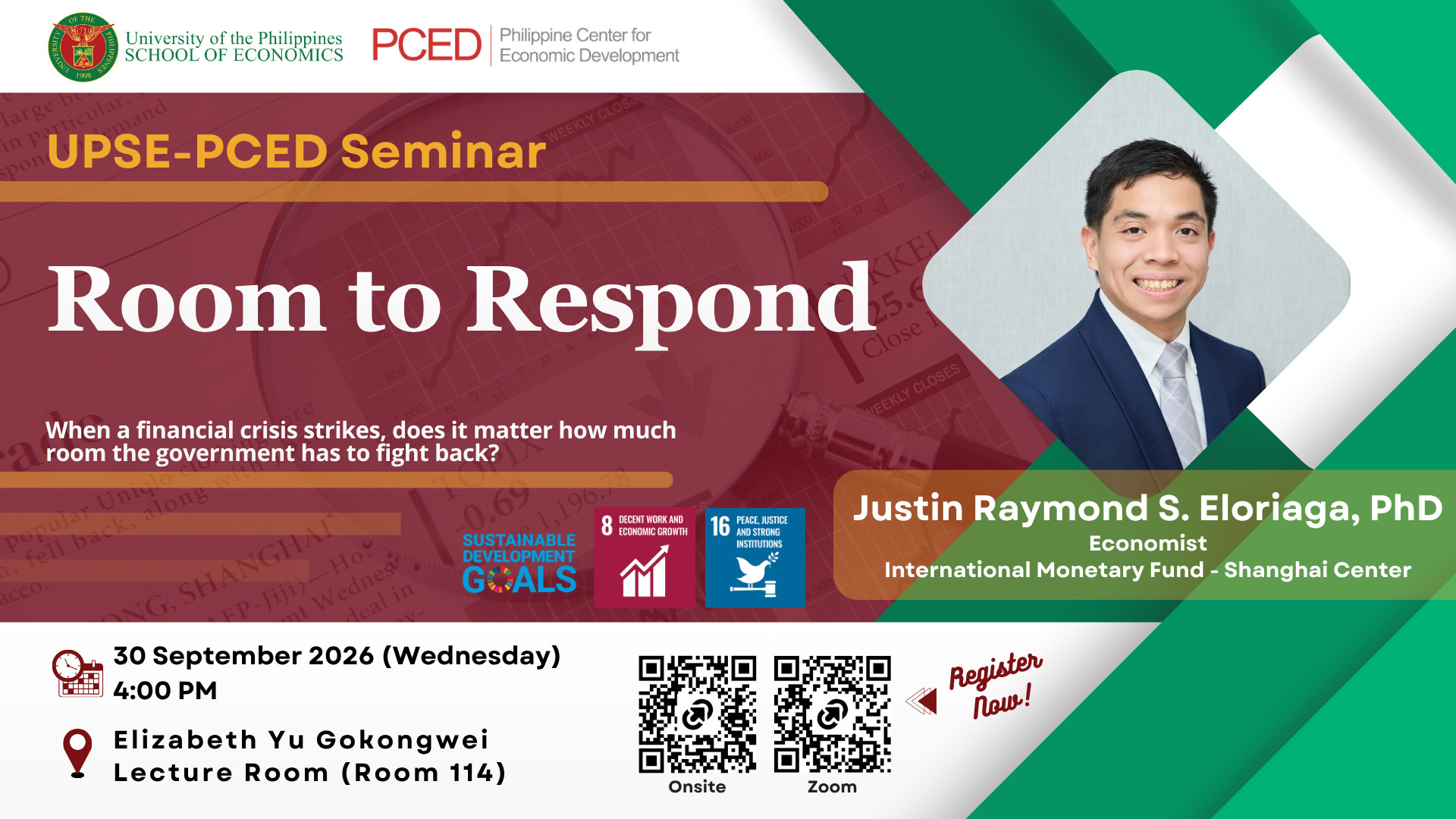
UPSE-PCED Seminar Series – 30 September 2026
ABSTRACT When a financial crisis strikes, governments with room to act are believed to escape with smaller recessions, and one number dominates the assessment of that room: the ratio of public debt to GDP. Across 140 systemic banking crises since 1976, we find the ratio matters less, and differently, than… Read More.
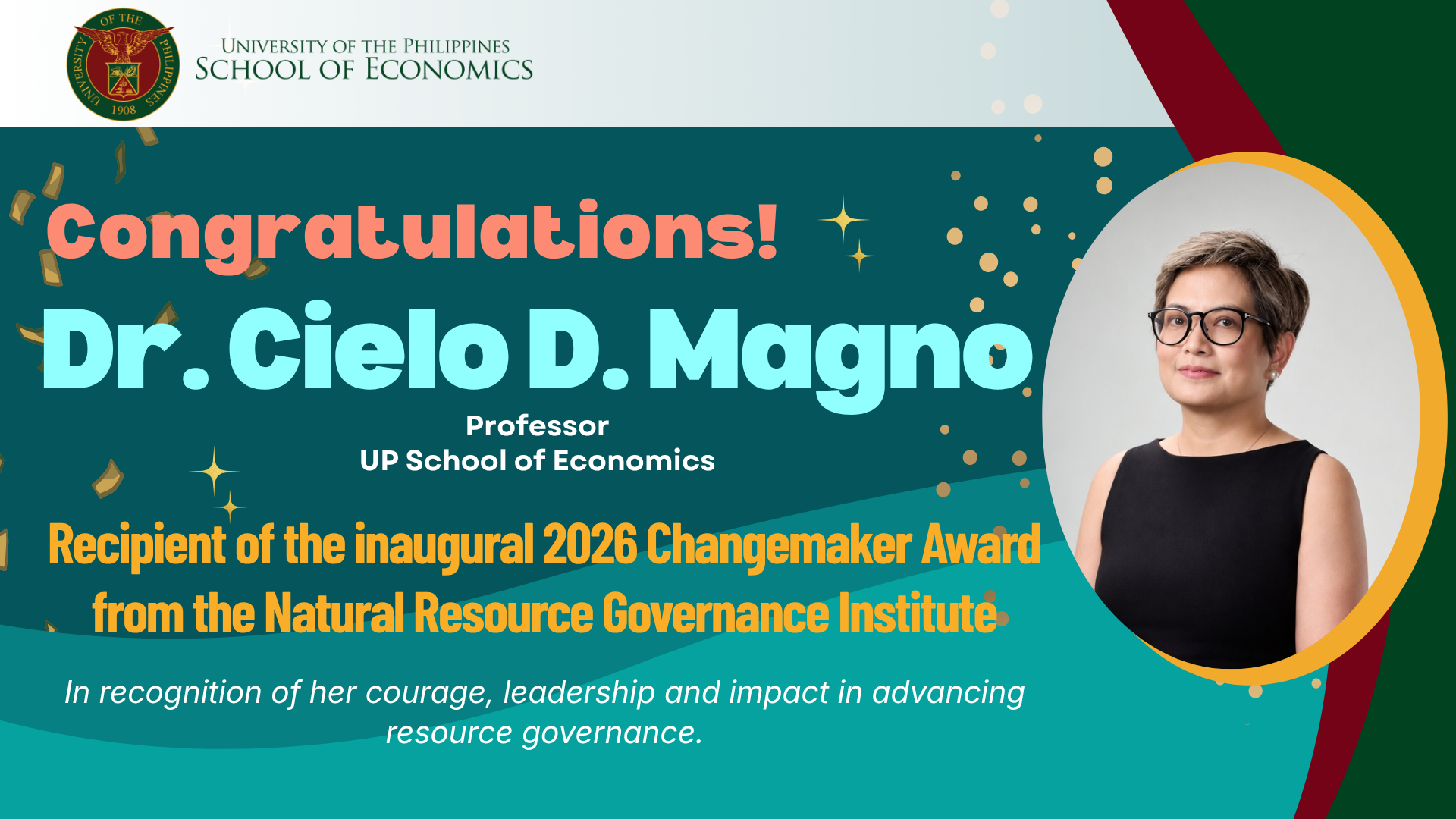
Natural Resource Governance Institute Changemaker Award 2026
In 2026, NRGI recognizes Cielo Magno of the Philippines as the inaugural NRGI Changemaker Award winner, alongside five leaders receiving special recognition for their contributions across Africa, Eurasia, Latin America and the Caribbean, and the Middle East and North Africa. Read More.
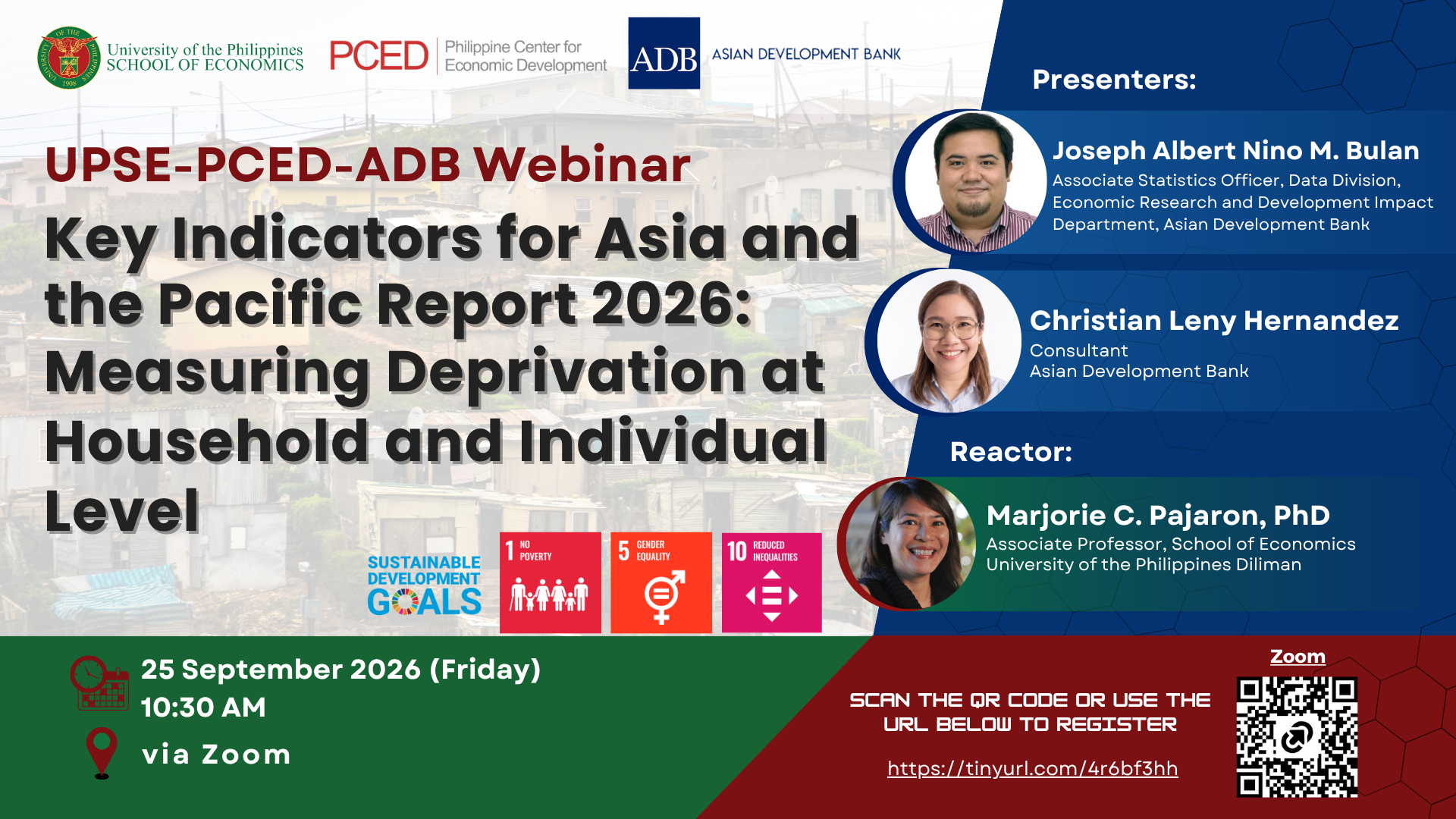
UPSE-PCED-ADB Webinar – 25 September 2026
ABSTRACT Over the past three decades, sustained economic growth has contributed to a dramatic reduction in extreme monetary poverty across Asia and the Pacific. The share of the population living in extreme poverty has fallen from more than six in ten people in 1990 to an estimated one in thirty… Read More.
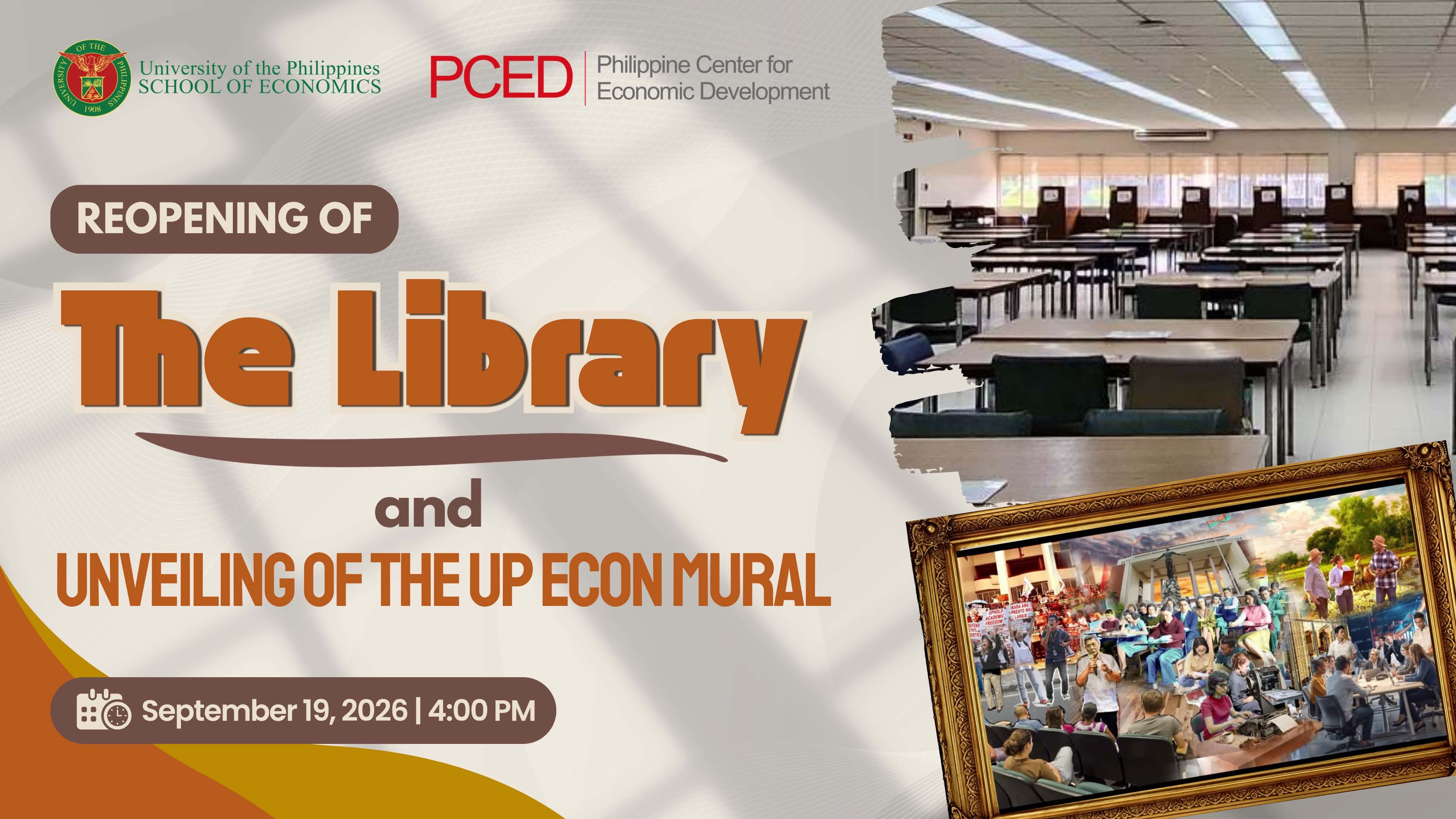
Reopening of the Library and Unveiling of the UP-Econ Mural
Reopening of the Library and Unveiling of the UP-Econ Mural A meaningful milestone for the UP School of Economics as the Library reopens and the UP-Econ Mural is unveiled. 📅 September 19, 2026 | 4:00 PM📍 UP School of Economics Read More.